
Why Think In Public?
From ancient stones to quantum strangeness, a reflection on curiosity, uncertainty, and learning out loud


I was standing at the base of the Great Pyramid in 2024 when something shifted.
Nothing dramatic happened. I just noticed that the explanations I’d arrived with didn’t quite fit what I was looking at.
The scale is one thing. You can read about it, see photographs, and watch documentaries. But standing there, running your hand along stonework that was cut and placed with a precision we still struggle to fully explain, something changes. The gap between what we confidently claim to know and what we can actually account for becomes harder to ignore. Not because the science is wrong, but because it doesn’t feel complete. The explanations work on paper. They feel thin in person.

A similar thing happened last year in Peru. At Sacsayhuaman, at Ollantaytambo, you see the same pattern - stonework that doesn’t just suggest skill, but a kind of understanding we haven’t fully recovered. Stones fitted so precisely that a blade won’t pass between them. Angles and joints that seem to anticipate forces we’d need software to model. Again, not unexplainable. But not fully explained either.

I didn’t come away from those trips with theories. I came away with better questions.
That feeling of “this doesn’t quite add up, and I can’t look away” turned out to be useful preparation for quantum mechanics.
When I first encountered the double-slit experiment, my reaction was simple: that can’t be right. A particle behaves differently depending on whether someone is watching. That sounds like philosophy dressed up as physics. It sounds like something you’d hear from someone trying to sell you a crystal.
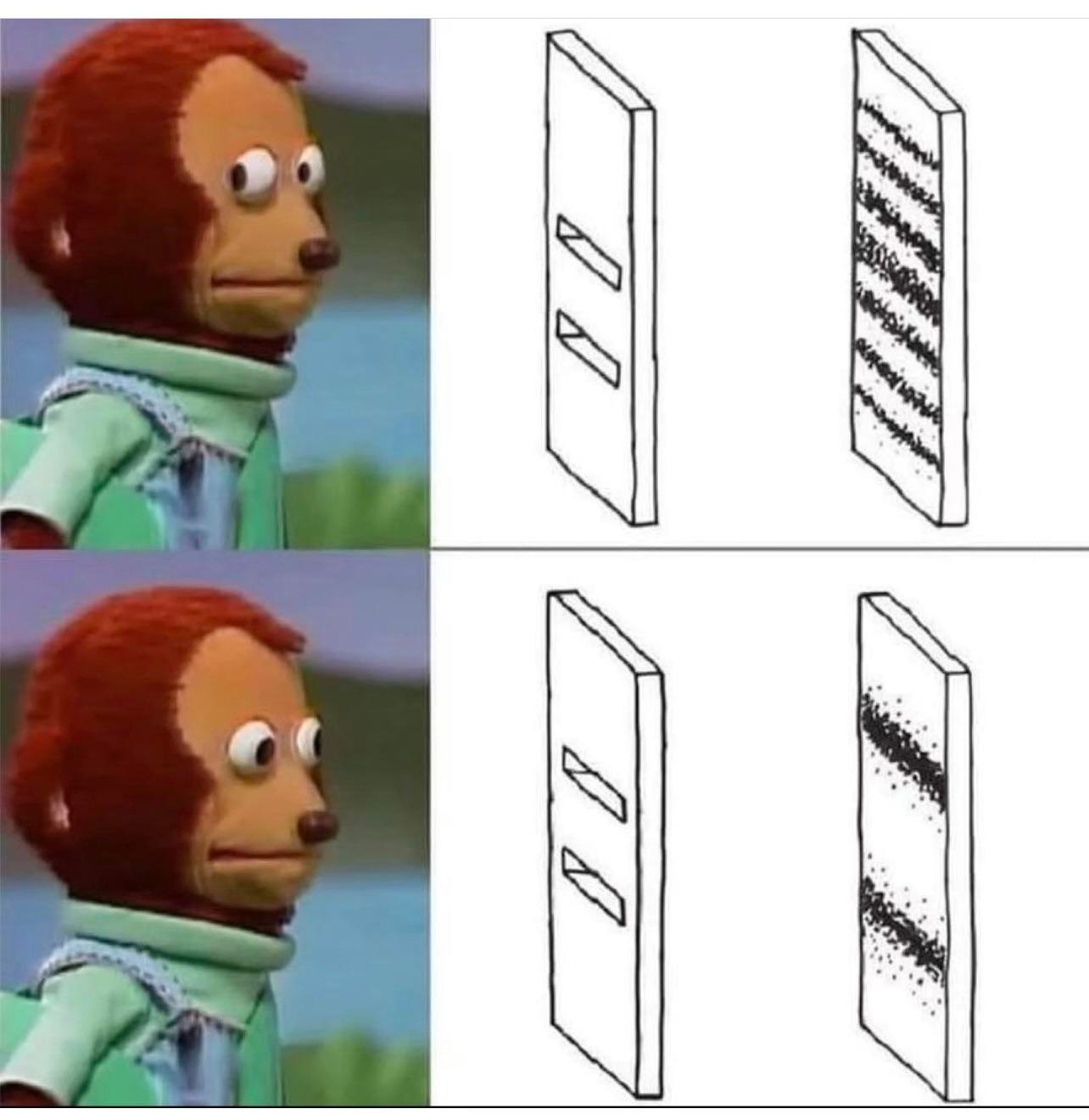
Except it’s not. It’s one of the most rigorously tested experiments in the history of science. Run it with photons, electrons, even molecules and the result holds. Observation changes the outcome. Not metaphorically. Physically.
Quantum entanglement was similarly disorienting. Two particles, separated by any distance, appear to share information instantaneously. Einstein called it “spooky action at a distance” because it bothered him, too. It’s since been confirmed experimentally, repeatedly, and with increasing precision.
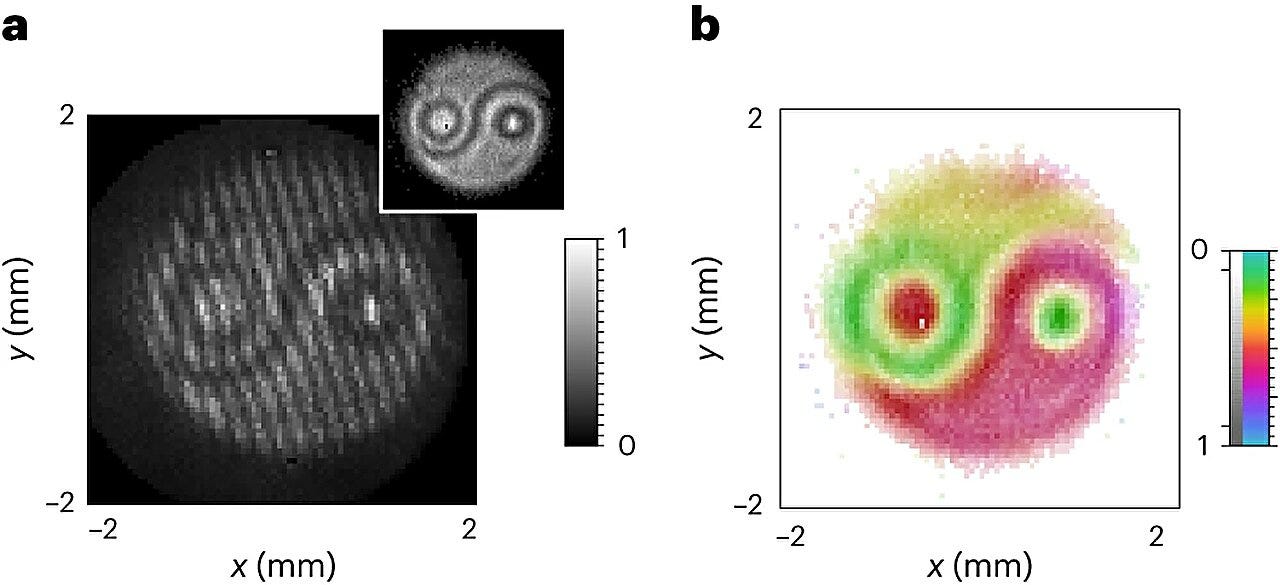
What struck me wasn’t just the strangeness of these results. It was the combination: “this feels impossible, and yet the evidence is strong”. That’s a deeply uncomfortable place to sit. And yet it might be the most honest place to think from.
Because if reality itself can behave in ways that are alien to human intuition, then a lot of our confident mental models deserve a second look. Not to discard them, but to hold them a little more loosely.
This is where consciousness enters the picture, and where things get genuinely interesting:
Quantum mechanics raises the question of the observer;
Neuroscience raises the question of subjective experience; and
Artificial intelligence raises the question of whether you even need biology to produce something that looks like awareness.
These three fields don’t typically talk to each other, but they’re circling the same problem from different directions: “What is the relationship between mind and reality?”
I don’t have an answer to that. I’m not sure anyone does, at least not one that holds up from every angle. But I’ve noticed that the more I read across these areas, the more the edges blur in ways that feel important rather than sloppy. Patterns emerge. Questions from one domain reframe questions in another. The same tensions - between the observer and the observed, between what we can measure and what we experience, between mechanism and meaning - keep showing up.
That’s what this publication is for.
I’ve always found that the clearest way to understand what I actually think is to say it out loud and see what survives.
Private thinking only gets you so far. You can circle the same idea endlessly in your own head without ever noticing the assumption holding the whole thing together. But the moment you write it down, or share it with someone who thinks differently, the weak joints reveal themselves. Someone asks the one question you hadn’t considered. A piece of evidence you’d been ignoring suddenly demands attention. The idea either holds up under pressure, or it doesn’t.
Writing publicly is my version of that process. Not because I want to broadcast conclusions, as I don’t have many… but because thinking improves when it’s exposed to friction.
You’ll find reflections here on books I’m reading, experiments I’m trying to understand, TV shows that made me think, and questions I keep circling back to. None of it is offered as settled truth. I change my mind regularly and happily when something better comes along. What I care about is whether an idea makes sense, connects to what we already know, and continues to hold up after you’ve sat with it for a while.
If any of that resonates, I’d genuinely love to know: What’s an idea you encountered that felt impossible at first, yet became harder to ignore the more you learned about it?